
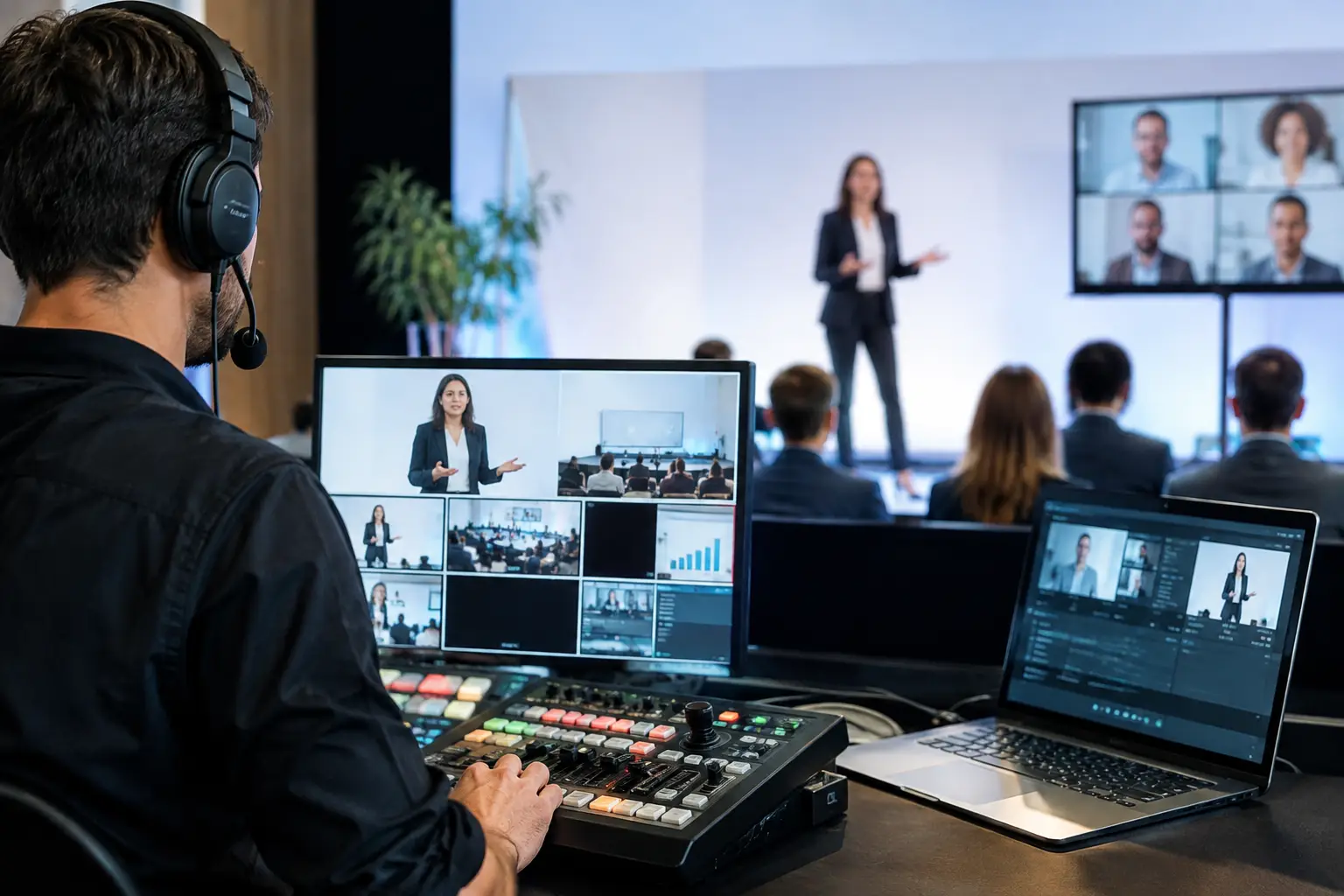
A keynote lands differently when 400 people in the room applaud while 1,200 remote attendees are left staring at a buffering screen. That is the gap hybrid conference production services are built to close. The job is not to bolt a livestream onto a live event. It is to create one intentional experience where every audience member can hear, see, participate, and act on what matters.
For organizations with big ideas and finite internal capacity, hybrid conferences can extend reach, protect accessibility, create valuable content, and make sponsorship more compelling. They can also expose weak planning fast. A great ballroom does not fix a poor virtual experience, and an impressive streaming platform cannot rescue a program designed only for the people in the front row.
What Hybrid Conference Production Services Actually Cover
Hybrid production sits at the intersection of event strategy, broadcast technology, audience design, creative direction, and on-site operations. It requires a team that understands the conference as a whole, not a collection of equipment rentals and platform logins.
At its core, the work starts with a decision: what should each audience experience, and what should they be able to do next? A fundraising summit may prioritize donor conversations and sponsor visibility. A healthcare education conference may need reliable continuing-education tracking, captioning, secure access, and clear session records. A corporate leadership meeting may need confidential breakouts and content that can be repurposed for teams who could not attend.
The production plan follows that purpose. It can include room design, staging, lighting, presentation management, camera direction, audio engineering, livestream delivery, virtual-event platforms, speaker coaching, remote presenter support, attendee communications, recording, captioning, and post-event content editing. Some conferences need the full ecosystem. Others need a smart production layer added to an event team that already has venue and registration logistics covered.
That flexibility matters. Paying for a national-scale production footprint when your event needs a focused, well-run broadcast is not strategy. Neither is underinvesting in the technical and staffing details that determine whether remote attendees stay engaged.
The Difference Between Streaming an Event and Producing One
A camera at the back of the room records what happened. Production shapes what the audience experiences.
In a well-produced hybrid session, the virtual viewer sees purposeful camera angles, readable slides, clean audio, speaker close-ups, lower-third graphics, and moderated questions. The in-room audience sees a stage built for both the room and the lens. Speakers know where to look, when to pause, and how to acknowledge people participating from elsewhere.
That distinction is especially critical for panels. A live audience can tolerate a little conversational chaos because they are physically present. Remote participants cannot. When panelists talk over one another, turn away from microphones, or refer to a slide nobody can read, online attention disappears. A producer, moderator, and technical director keep the conversation moving without making it feel overmanaged.
The strongest hybrid programs also resist treating virtual attendees as an afterthought. If the only remote interaction is a chat window no one monitors, the message is clear: you are welcome to watch, but you are not really in the room. Assigning a virtual host or chat moderator changes the dynamic. It gives remote attendees a human point of contact, surfaces their questions, and helps them navigate breaks, resources, and networking opportunities.
Build the Conference Around Audience Behavior
The most common hybrid mistake happens before the first microphone is checked. It is designing a full-day agenda for in-person attention spans, then asking remote attendees to consume it in exactly the same way.
People in the room have environmental energy. They can meet peers, visit exhibitors, grab coffee, and reset between sessions. People at home or at work are competing with email, meetings, family needs, and a dozen browser tabs. Their experience needs deliberate pacing.
That does not mean every hybrid conference should have separate agendas. It means session design should acknowledge different behaviors. A 75-minute keynote may work when it includes visual shifts, moderated audience questions, and a clear takeaway. A 75-minute lecture delivered from a static wide shot probably will not. Remote-friendly schedules often benefit from shorter content blocks, structured interaction, and breaks that offer a genuine reason to return.
Networking also requires a decision, not a wish. If connection is a core event outcome, decide whether remote attendees will join curated small groups, schedule one-to-one meetings, participate in topic-based chats, or access a separate virtual lounge. If meaningful cross-audience networking is not feasible for your format or budget, be candid and build value elsewhere through content, access, or follow-up.
Production Choices That Protect the Experience
Hybrid conference production services should make technical choices feel strategic rather than mysterious. The right setup depends on audience size, venue conditions, program complexity, content sensitivity, and the consequences of failure.
Audio comes first. Viewers will forgive an imperfect camera angle long before they forgive muffled sound, feedback, or a presenter who disappears every time they turn toward a screen. Every speaker needs a microphone plan, including audience members who may ask questions. Playback videos, walk-up music, remote callers, and interpreter feeds also need to be tested as part of one audio system.
Internet deserves the same rigor. Venue Wi-Fi is often built for email and guest browsing, not for transmitting a high-quality live program. Dedicated hardwired bandwidth, a tested backup path, and a team that knows who controls the network can prevent a difficult moment from becoming a public failure. No production partner can promise that technology will never hiccup. They should have a credible plan for what happens when it does.
Accessibility belongs in the production plan from the start, not as a late add-on. Live captions, American Sign Language interpretation where needed, accessible digital materials, color contrast, readable slides, and clear speaker practices make the event more usable for more people. They also improve comprehension for attendees watching in noisy offices, traveling, or joining from different language backgrounds.
Questions to Ask Before Hiring a Production Partner
The right partner will ask as many questions as they answer. They should want to know what success looks like beyond view counts, which audience matters most, what can go wrong, and where your internal team needs relief.
Ask how they handle speaker rehearsals, show calling, remote presenters, backup internet, session recordings, captions, and attendee support. Ask who is physically on-site, who is monitoring the virtual experience, and who has authority to make a fast decision during a live problem. A proposal that names equipment but not people and process is incomplete.
You should also ask how the team will support your brand. Hybrid events multiply brand touchpoints: registration pages, holding slides, stage graphics, email reminders, virtual backdrops, sponsor placements, post-event clips, and attendee follow-up. If those pieces feel disconnected, the event can look assembled rather than led.
Finally, discuss the content life of the conference. A professionally captured event can fuel short social clips, on-demand sessions, sales follow-up, donor stewardship, training resources, and next year’s promotion. Plan permissions, release language, edit priorities, and delivery deadlines before the conference starts. The best time to decide what footage you need later is before cameras roll.
Make the Investment Answer to a Business Goal
Hybrid formats are not automatically cheaper than live events. They can reduce travel barriers and expand attendance, but they add production infrastructure, platform needs, staffing, and content support. The value comes when the format advances a goal that a room-only event cannot reach as effectively.
For a nonprofit, that may mean bringing national advocates into a regional convening while preserving the energy of an in-person donor experience. For an association, it may mean serving members who cannot travel without sacrificing the revenue and community that come from gathering in person. For a company, it may mean turning a leadership event into an always-on content asset rather than a one-day expense.
LARA Marketing Group approaches this work as an embedded event and brand partner, connecting the technical plan to the audience, message, and outcomes leadership needs to see. That is the standard worth demanding from any production team: not more gear for its own sake, but the right production decisions for the result you are trying to create.
A hybrid conference earns attention when both audiences feel considered, not accommodated. Start with the action you want people to take when the program ends, then build every camera shot, stage cue, interaction, and follow-up around helping them take it.
0 Comments